
/filters:quality(90)/fit-in/970x750/coros-web-faq/upload/images/50eea6b47bb75e062fba07354edb4309.jpg)
The ultramarathon is no joke. When going the distance, there are infinitely more factors to consider and possibilities to plan for. It can be an overwhelming amount of logistics just to get to the start line with a prepared crew. Not to mention the hours spent training every week.
Whether your race is next week, next month, or next year, it's always a good time to review the best ways to make the most of your big day, and the training leading up to it. Below, COROS Coaches break down the do's and dont's of ultrarunning to maximize preparation, ease nerves, and help focus on what truly matters: enjoying the race and executing your strategy.
Set Yourself Up for Success
Mapping
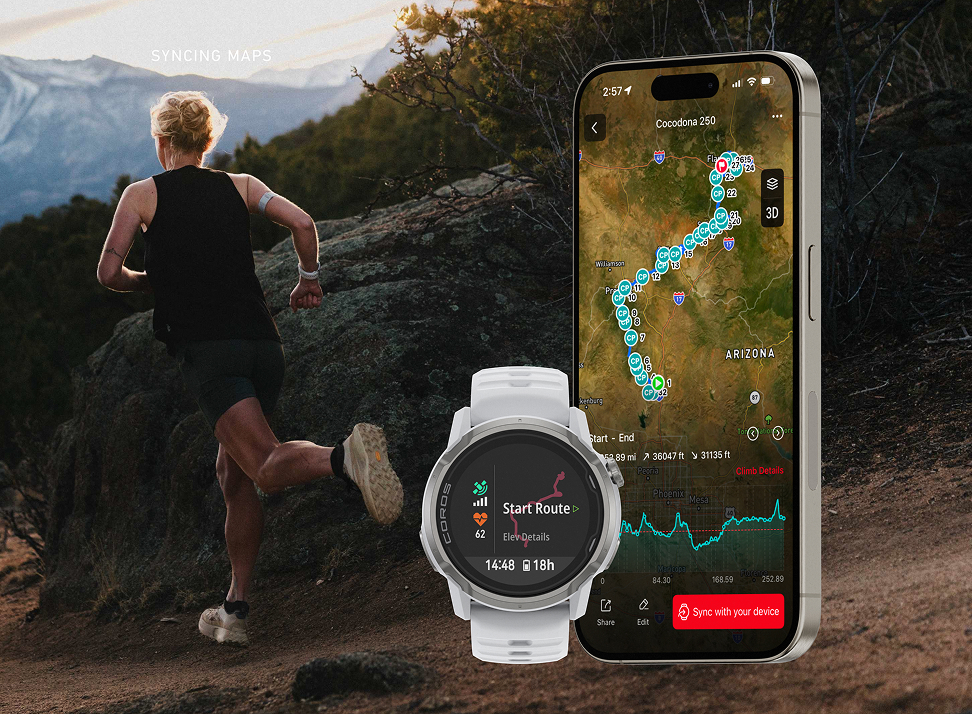
Do: Download the Route
When setting up your watch for success, you should download the route and input waypoints such as aid stations. Many course maps will already have this information added to the GPX file, but if not, you can add custom waypoints anywhere on the course.
The mapping feature is a great tool to use in training as well. You can add pins to highlight water fill ups, practice turn-by-turn directions, or explore new training routes using the COROS app. All of these features help you prepare for race day and ease the mental burden when you're on course. By training with each tool ahead of time, you set yourself up for a smooth, confident race.
Don't: Save it for Race Day
Race day is not the time to try out new data fields or metrics. While GPS watches have a ton of features, we only want to focus on those most important to us. To do this, be sure to customize your activity screens. If your training focuses on heart rate and effort, don't bother with a pace-focused screen for your race. Practice how you play, and make sure you understand which screens work best for your goals. When you know what to look at during your race, you will avoid confusion, which lets you focus on the strategy you have carefully crafted.
The exception: Some ultra course maps aren't confirmed until the day before the race! Make sure you are following race director emails and check-in procedures to have the most recent version on your watch. Each time a map is updated, you will need to upload it to your watch again.
Nutrition
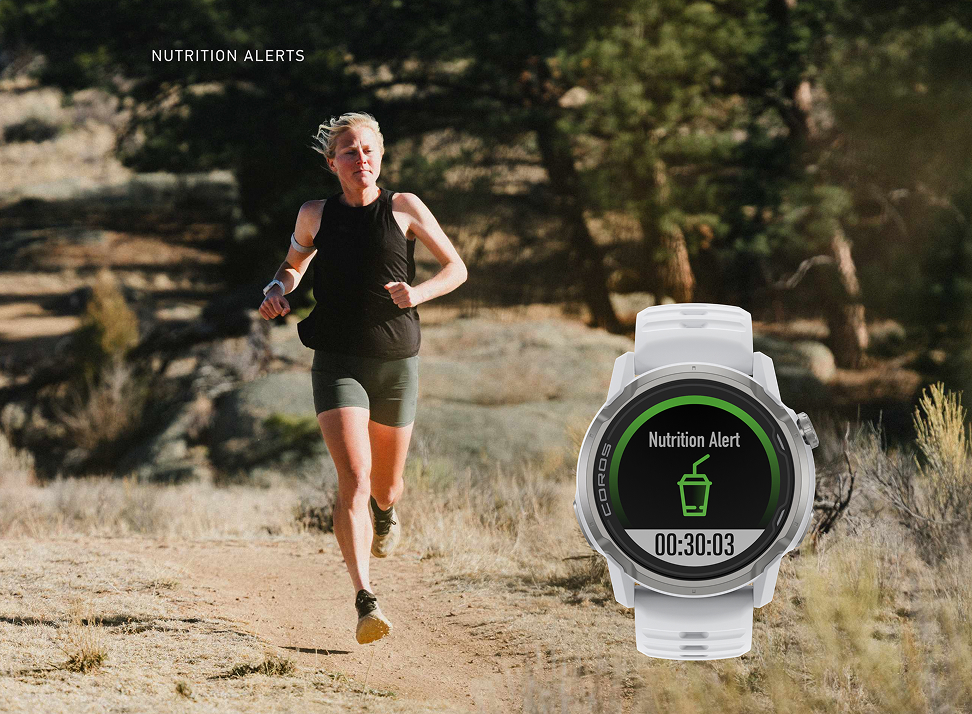
Do: Turn Nutrition Alerts On
Fueling and nutrition are some of the most important parts of any ultra. You cannot ignore your body's need for fuel. During a record-setting run at Black Canyon 100K, Hans Troyer nearly hit the wall. In his words, "Luckily, carbs are pretty magic". A well-timed fueling stop saved his race.
To avoid the bonk and stay on your eating schedule, turn nutrition alerts on. These are reminders at custom intervals to take in your food of choice - whether that is gels, chews, candies, or any other solid food.
Every body is different and the amount you take in, and when, depends entirely on your strategy. Start with some simple snacks on training runs and see how your body responds. For the long days, find a treat that you always enjoy to combat "flavor fatigue" and give yourself a mid-run pickup! Gummy worms and Nerds clusters are a COROS Coach favorite!
Don't: Stir the Pot
An upset stomach can drastically impact your race, even forcing a DNF (did not finish) if it gets bad enough. No one wants to cross the finish line and spend the rest of the day in the lavatory.
Don't mix in new foods on race day and don't overload your system. If you have trained at a consistent fueling interval, stick to it and trust your body to handle what it already knows. Upset stomachs are especially common in ultra marathons because your body is working hard and moving blood away from digestion to support other areas. Taking too many, or two few, gels or drinks without set timing can overwhelm your system. If an upset stomach or a bonk starts to creep up on you, drink something carbonated from an aid station and stick to your fueling plan. Once you fall off the strategy, it is exponentially harder to make up the lost fuel.
Sleep

Do: Rest Early
Throughout your training, the goal is to ensure you are providing your body with ample rest and recovery. Your COROS watch can help paint a clear picture of both the quantity and quality of your sleep. Regardless of your best intentions, the night before the race or a big training run is always the hardest to sleep. To make up for this, ensure you maximize rest earlier in the week. The amount of sleep during race week is far more important than the amount of sleep on race night. Plan ahead and get rest!
Don't: Break Your Rhythm
While sleep is important, we don't want to disrupt your normal circadian rhythm. Your circadian rhythm is responsible for your body's natural tendency to go to sleep, wake up, and other physiological responses during certain portions of the day. If you are putting a priority on sleep and sleeping in until 9AM, but you usually wake up at 6AM, you may be doing yourself more harm than good. Do your best to stay on your normal healthy routine.
For Race Week
Training
Do: Keep Running
Your training prior to race day should allow you to recover, but also stay fresh. The best tactic is to train on course for short segments so you can become familiar with the terrain and build confidence. This is a great time to make sure your course map is up to date and accurate! Aim to familiarize yourself with the course without overstressing yourself.
Don't: Overdo It
There are two things we want to avoid during race week. First, avoid testing fitness. Pushing yourself this week will only takeaway from your race day abilities. Second, avoid not training at all. By not training, we allow our body to become stale and lethargic. If you're wondering what the right amount to train is, we would suggest getting your Training Status in the 50%-80% range, which would be a fantastic taper.
COACHES TIP: You have put in weeks and months of training, so it can be difficult to truly embrace the taper. During race week, you are not going to gain any additional fitness. Instead, your training decisions should be made towards feeling your best on race day!
Pace Strategy

Do: Set Multiple Goals
Part of race day success is planning for a best-case scenario, a likely scenario, and a worst-case scenario. Anything can happen on course, so having an A, B, and C plan allows you to adapt and stay focused. Your plan should include knowing the route, knowing the terrain, and having set effort levels that you do not exceed. Within an ultra, it's recommended to pace nearly all of your time in your Aerobic Endurance zone or below. The longer you spend in higher zones, the higher chances you'll need to drastically slow down later.
Make sure to check your pace zones regularly, as they will shift while you train and gain fitness. If you feel like your zones are off, take the Running Fitness Test to understand how your training is going. This will be a hard workout, so take it well in advance of your race!
Don't: Show Up and Blow Up
It is a mistake to go into your race with a "lets see what happens" mentality. Many athletes without a plan go out far too fast and end up going slower than they thought, or having to DNF somewhere on course. Be sure to know the terrain and your effort ceilings so you can be prepared and make adjustments as needed. To help manage your intensity, especially on the more technical courses, you can utilize your Effort Pace.
Packing
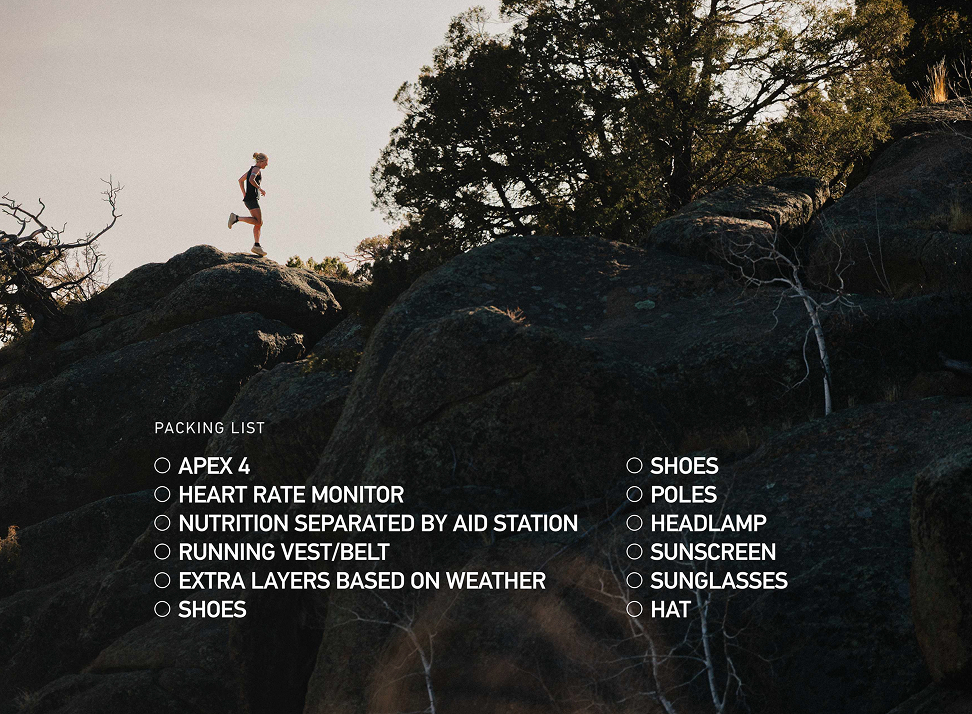
Do: Lay it Out
When packing, go with the equipment and nutrition you have been using in training. Be sure to write out a checklist of all the things you will need to ensure you don't leave anything behind! It also helps to lay out nutrition and clothing needed at different aid stations, so your crew will have everything organized and ready for your arrival.
Some distances require much more gear than others, like headlamps and emergency layers. Make sure you are checking for any required gear lists from race directors so that you don't get turned away at the start line!
Don't: Overpack
It's easy to overpack. You've been training for this race for a long time and don't want to forget something. To make it simple - if you haven't used something in training, don't use it on race day! Pack what you know works and make things as simple as possible. Having a bunch of extra items will only confuse you and your crew during the later stages of the race. You will be functioning on a tired brain, so extra distractions will only cause chaos.
Test all of your equipment in training, make sure batteries are charged and holes are patched, and then pack what you know works!
Final Race Day Reminders
Ultra races are intense. They have been called eating contests and logistics equations for good reason. Even if you start at a slow pace (which is advised), things can quickly become challenging. With the nature of these prolonged races, mistakes tend to add up and cause trouble later on. Keeping your focus simple will help as you get tired and sleep-deprived. By mitigating issues early, you save yourself time and effort down the trail.
Here are some final thoughts from COROS Coaches:
- Plan in advance and stick to it! The logistics in your training should replicate your race expectations.
- Make a checklist. Keep to the essentials you need for easy mental processing.
- Plan for multiple scenarios. Just because you miss your A goal doesn't mean your day is over! Be willing to adapt and make the most of the race you have, not the race you wanted.
- Utilize your GPS watch to accomplish your goals. You carry a wealth of resources on your wrist. Lean into learning the systems, practicing what helps the most, and then use it to your advantage on race day.
Most importantly, remember to enjoy the process! Ultra running takes you to some of the most beautiful places imaginable and teaches us all a bit about ourselves. Results aren't everything. Don't forget to soak up the scenery, smile at the aid station volunteers, and celebrate your fellow racers.