
/filters:quality(90)/fit-in/970x750/coros-web-faq/upload/images/31908b6e9e4235181117746d50067112.png)
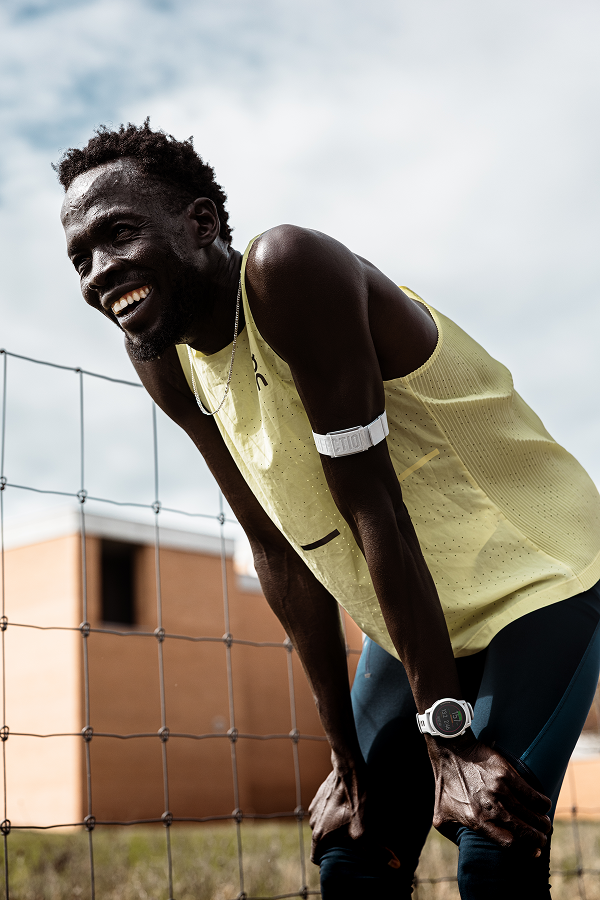
Dominic Lobalu is the embodiment of strength, both on and off the track. With medals on the European stage and recognition on the global scene, his accolades speak for themselves. But behind the results lies a story of determination and an unwavering drive to keep improving.
Originally from South Sudan, Dominic's journey to the top of European athletics has been shaped by resilience and a relentless pursuit of 'better.' Whether it's pushing himself day after day in training, chasing marginal gains in the half marathon, or approaching life with gratitude, that mindset defines everything he does.
Curious to see how that mindset translates into his training? Below, we look into his methods for building speed, endurance, and resilience.
Building a Foundation
Like many athletes, Dominic starts by building a strong level of base fitness. Over the course of 8 weeks, with a stint at altitude, he focuses on his aerobic base. His Base Fitness steadily rises, leading to a test of fitness over the half marathon distance, clocking 59:26 in Barcelona.
"I enjoy this time; sessions are longer, which I enjoy. I love to run fast but there is something exciting about the roads and longer efforts. Barcelona was good, I was hoping to run a bit quicker but the fitness was good."
Track Your Own Fitness: The COROS Base Fitness metric is the 42-day rolling average of your Training Load scores. It reflects your long-term level of fitness during different times of the year and training phases.
Specific Training Phase
As with any form of periodised training, the peak phase is crucial for translating all the fitness built into racing form. For Dominic, this came in the form of an intense block of half-marathon-specific training ahead of Berlin. During this time, one special block of training consisted of three intense training days designed to vigorously stimulate Dominic's ability to run at race speed in a fatigued state.
| Day | Session | Volume | Avg Pace | Training Load |
| 1 | Road Intervals | 6×2km + 4×1km | 2:47/km (2×2km), 2:39/km (1km) | 253 |
| 2 | Tempo Run | 60 min continuous | 3:20/km | 104 (357) |
| 3 | Track Speed | 10×400m + 10×300m | 65s (400m), 44s (300m) | 157 (514) |
Day 1: Threshold Control
The first day consisted of a lengthy 6 x 2km, 4 x 1km road session, with short active recovery. Run at faster than half marathon pace, with short active recovery, this session is designed to improve:
- Lactate Tolerance: training the body to operate efficiently under accumulated fatigue
- Pace Consistency: maintaining form and rhythm across reps
- Race-Specific Endurance: replicating the stress of mid-race conditions
Day 2: Sustained Aerobic Effort
The second day shifts to a continuous 60-minute treadmill run at upper-end aerobic/tempo effort. "I try to stay calm and relaxed in this effort, I am mainly focusing on my form". Adding to the load, the focus here is on control under fatigue.
- Maintaining even pacing despite tired legs
- Reinforcing running economy
Day 3: Speed
Turning back to the track, Dominic aims to keep in touch with speed ahead of the summer. The stimulus of this session is:
- Shorter, faster intervals (400m and 300m)
- Minimal recovery between reps to simulate residual fatigue
- A focus on mechanics and stride efficiency

Training the Right Stimulus
What makes this block effective is not just the intensity, but how the sessions interact together. The cumulative effect mirrors race conditions, where the body must deliver speed, efficiency, and endurance simultaneously.
You don’t need to replicate Dominic’s volumes to benefit from this approach. The principle lies in structured layering. To apply it effectively, athletes need clear boundaries and understanding.
This is where data and metrics become vital to help safely navigate heavy blocks of training. You would expect to see an increase in your Intensity Trend, but what else should you monitor to avoid overreaching?
Training Status: The breakdown within the Intensity Trend clearly marks highlights when your training has been Excessive relative to your recent training. A starting point would be to monitor this and ensure you aren't stacking too much, too soon. Over time, if you continue this style of training, your body will become accustomed, which is where variation and rest periods are important.
Base Fitness: This is unlikely to change drastically after a single session, but as you progress through layered training, this is where you will begin to see a sharp rise in values. On easier days, you'll likely see Base Fitness drop back down a few points. This is normal and expected. Try to view Base Fitness as a long-term trend, rather than a daily metric.
Load Impact: a 7-day rolling average of your training load that measures short-term stress or fatigue on your body. This value will change the most, given the duration it collects data over.
Training Load: A higher value (like Dominic’s 253 on Day 1) should still sit within your normal range of progression. They will be comparable to previous hard sessions surrounded by recovery. Sudden, unplanned spikes are where injury risk rises. In Dominic's example here, his Training Load value did not deviate from his norm, with values of 253, 104, and 157.
Sleep, RHR & HRV: During intense periods of training, monitoring your sleep and HRV data against typical values is an important factor for staying healthy and ensuring the body is absorbing the training correctly.
Benefits for Track Athletes
Although this block is aimed at half-marathon preparation, it also provides a foundation for Dominic’s summer track season. Building endurance to support 5,000m & 10,000m racing and improve fatigue resistance for race-winning surges. It also helps to maintain speed mechanics through high-quality, fatigue-informed work.
"Training is hard over the winter, but the feeling when you are in peak shape and challenging for wins makes it all worth it. Through my career and story, I want to inspire people to pursue their dreams themselves. Nobody will want it as much as you want it for yourself. You have to believe that first and work for it."
Many track athletes neglect this winter-distance focus, but for Lobalu, it allows him to maintain both speed and strength, giving him an edge when transitioning to championship racing.