/filters:quality(90)/fit-in/970x750/coros-web-faq/upload/images/089b735e5694b7a9a9229027b9bf5774.png)
The Transgrancanaria Marathon is one of the flagship races within the Transgrancanaria event on the island of Gran Canaria, Spain. Covering roughly 46 kilometers with nearly 1,800 meters of climbing, the race begins in the mountain village of Tejeda before descending toward the coastal finish in Maspalomas.
The course creates a unique racing dynamic. The opening kilometers feature steep climbing toward the high plateau around El Garañón, while the second half of the race trends downhill toward the coast. Athletes must balance climbing strength, technical efficiency, and sustained endurance as the terrain transitions from exposed mountain ridges to dry canyon descents.
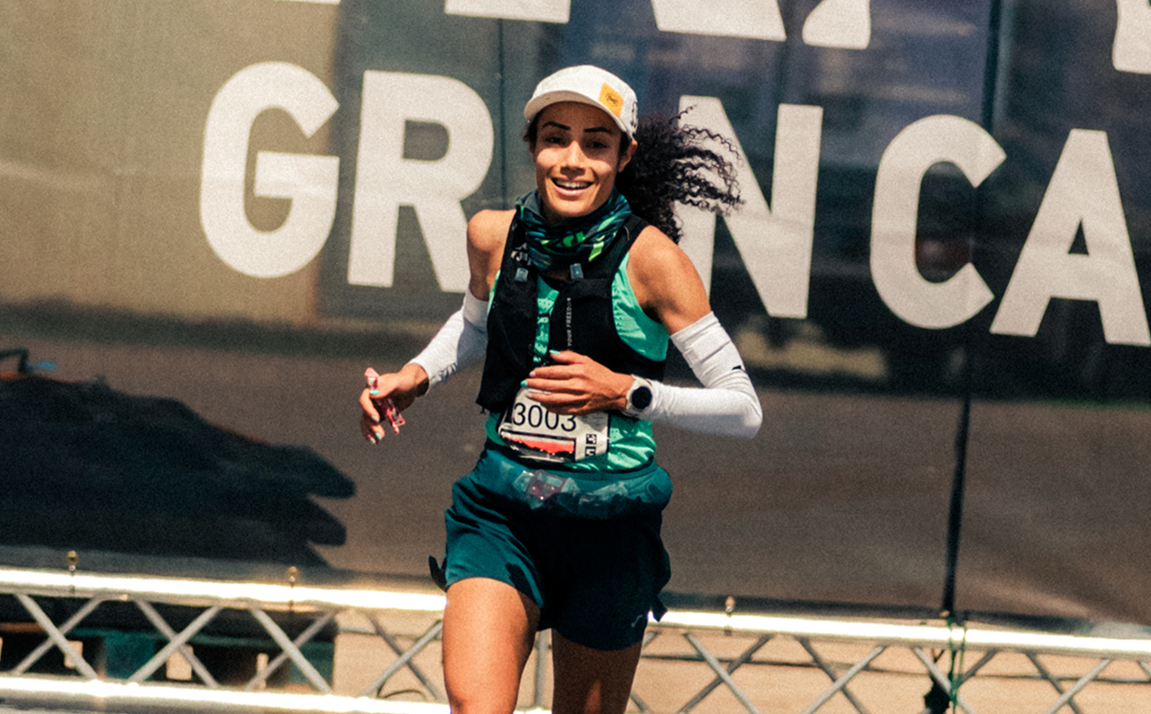
In 2026, COROS athletes Antonio Martínez and Ikram Rharsalla claimed victory in the men’s and women’s races. Although both athletes finished on the same podium, the strategies behind their wins looked very different.
Antonio’s race was defined by tactical adaptation. Ikram’s victory came from committing fully to her own race plan. Together, their performances highlight two successful approaches to racing a demanding mountain marathon.
Case Study 1: Antonio Martínez – Adapting to the Race
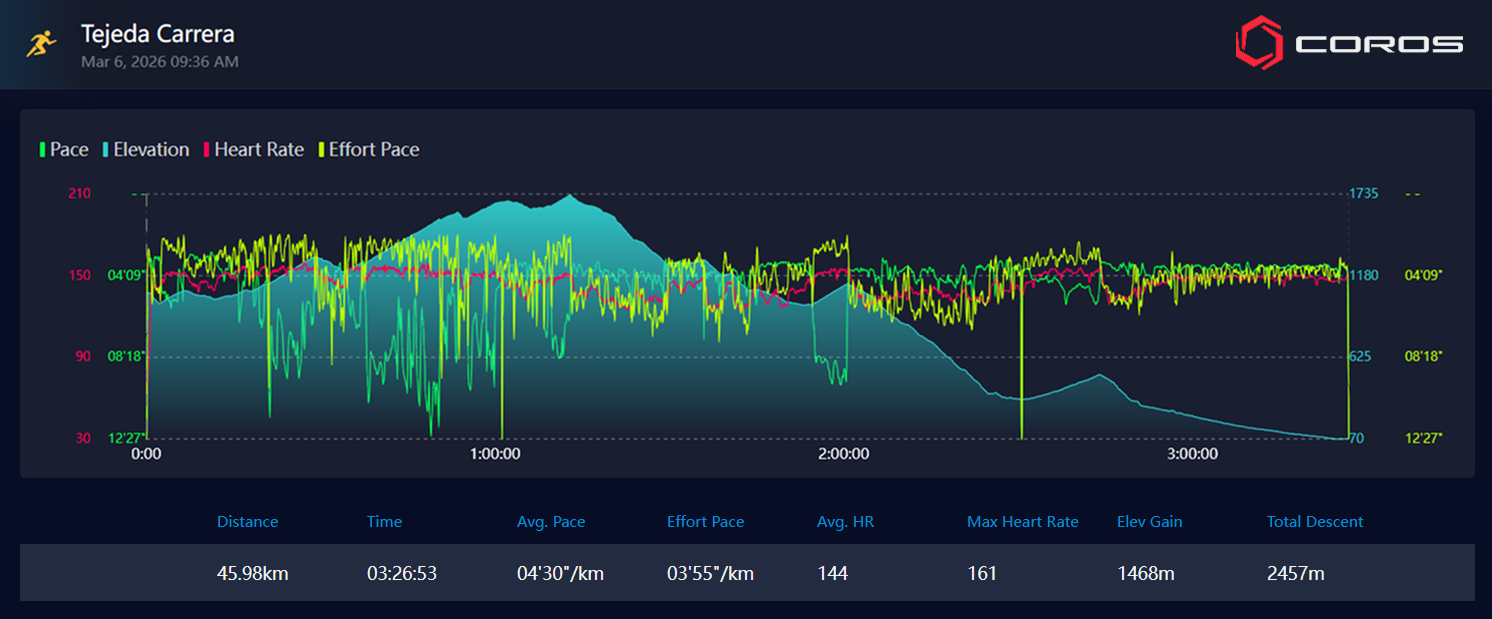
The Transgrancanaria Marathon begins with one of the most demanding sections of the course. Within the first 10 kilometers, runners climb roughly 1000 meters before the checkpoint at El Garañón, often facing strong winds and cold temperatures at altitude.
Antonio Martínez entered this section in the lead but did not control the race. Early on, he and Italian mountain runner Henri Aymonod separated themselves from the rest of the field, forming a two-runner lead group.
The two climbed together toward El Garañón, maintaining a steady but competitive rhythm.
This early phase placed significant stress on the athletes. The combination of steep climbing, exposure to wind, and cold mountain temperatures created one of the most physically demanding sections of the entire race.
Historically, Antonio tends to approach races with a progressive pacing strategy. He often allows early leaders to set the pace before gradually moving forward later in the race.
This time, the race dynamics forced a different decision.
Around the 10-kilometer mark, Antonio moved to the front earlier than usual. Henri's early aggression likely forced the shift in strategy, and Antonio chose to respond rather than risk allowing a gap to open on the first major climb.
From that moment forward, the race became far more tactical.
The Final Battle
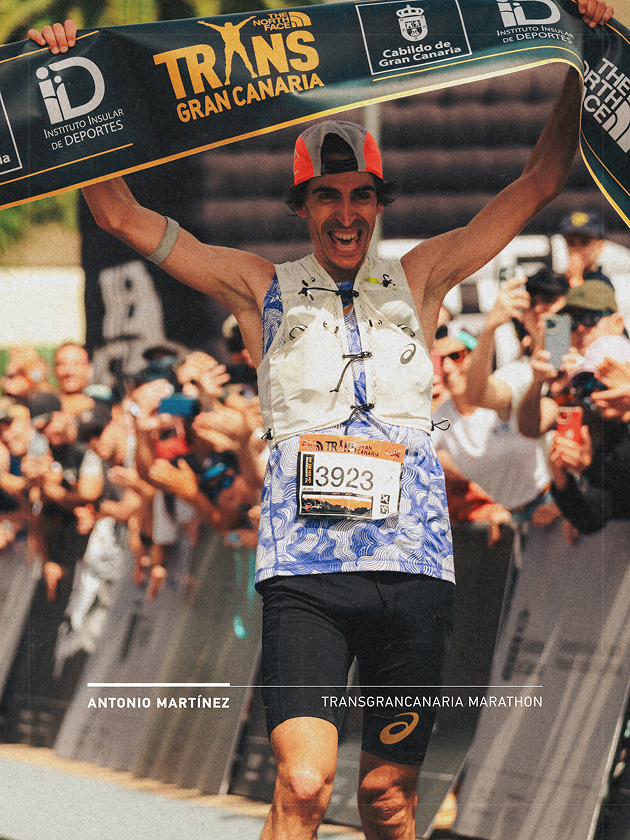
As the course transitioned into the long descending sections toward the south of the island, the race dynamic changed again.
Shortly after the Ayagaures aid station, Miguel Benítez closed the gap to the leaders and passed Antonio. The two traded positions as the pace increased.
In the final minutes of the race, the battle for the podium came down to three athletes: Antonio Martínez, Miguel Benítez, and Fran Anguita.
With less than ten minutes remaining, all three runners were still fighting for position.
Antonio ultimately managed the decisive move to secure the win.
His performance was supported by a strong and consistent physiological output throughout the race.
The most revealing metric here is Effort-Pace.
Because the Transgrancanaria Marathon course changes slightly from year to year, comparing finishing times alone can be misleading. Effort-Pace accounts for elevation changes and provides a clearer measure of physiological intensity.
Antonio’s 3:55/km Effort-Pace demonstrates a consistently high output across the entire race, particularly impressive considering the tactical surges required during the final kilometers.
Case Study 2: Ikram Rharsalla – Running Her Own Race
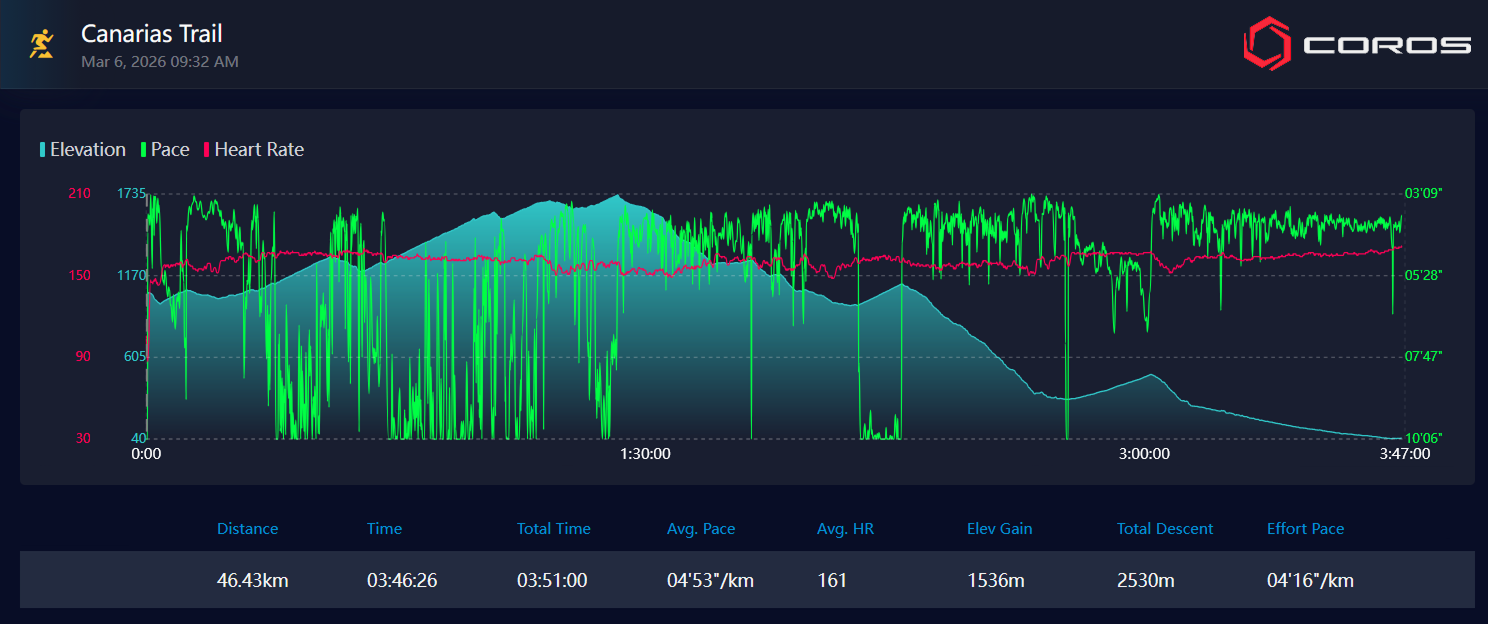
While the men’s race developed into a tactical battle, the women’s race unfolded very differently.
In the early stages of the race, Núria Gil took the lead. When the runners reached El Garañón at 11.7 kilometers, Ikram Rharsalla was still in second position, arriving less than two minutes behind the leader.
Rather than responding immediately to the early move, Ikram remained committed to her original race plan.
Before the race, she had made it clear that her goal was simple: run her own race.
That patience paid off as soon as the course transitioned into the descending terrain.
On the downhill sections after El Garañón, Ikram dramatically increased her pace while Nuria remained more conservative. The difference in descending speed quickly changed the race dynamic.
Ikram took the lead and began extending the gap.
From that moment onward, she controlled the race all the way to Maspalomas.
A Record Effort-Pace
Ikram’s performance also produced one of the most impressive metrics of the event.
Her 4:16/km Effort-Pace is currently the fastest recorded Effort-Pace for the Transgrancanaria Marathon within the COROS ecosystem.
Because Effort-Pace adjusts for terrain and elevation, it allows meaningful comparisons across different editions of the race, even when course distance or elevation varies slightly.
Ikram’s result places her performance among the strongest ever recorded for this distance at Transgrancanaria.
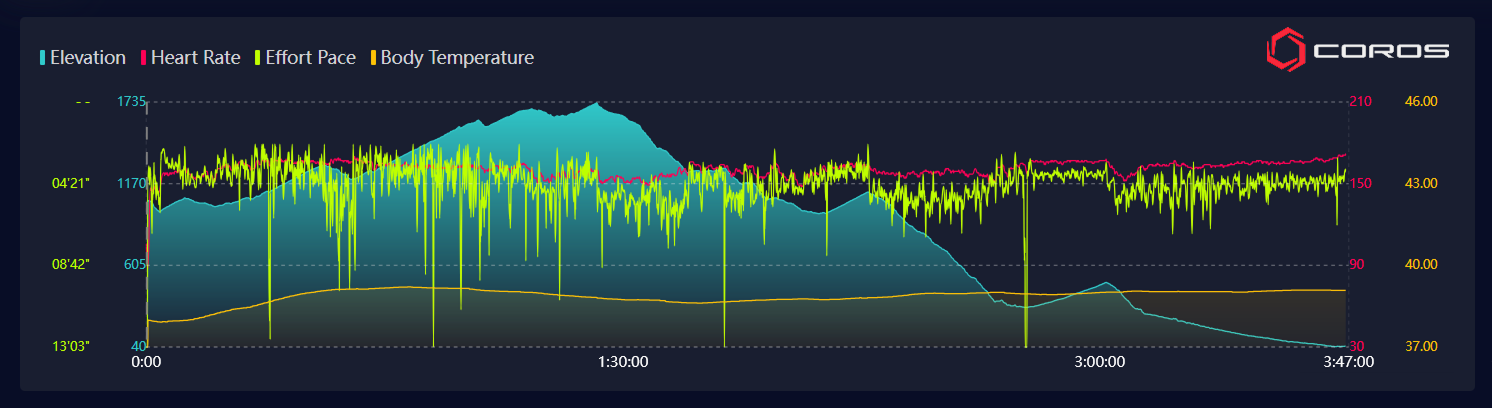
Ikram's Effort-Pace and Body Temperature data
Racing Through Changing Conditions
Another interesting aspect of Ikram’s race was the environmental variation across the course.
During the race, she recorded ambient temperature data using the COROS POD 2 and her body temperature using a CORE sensor.
Conditions in the mountains were relatively cool, but temperatures increased rapidly as the race descended toward the southern coast. The POD 2 showed nearly a 20°C shift from the highest summit to the finish.
Managing this transition is one of the hidden challenges of the Transgrancanaria Marathon. Athletes who push too aggressively in the cool mountain air can struggle once the race reaches the warmer lower elevations.
Ikram's body temperature clearly rose during the early stages. This was partly a result of general warm-up due to exercise, but also due to the elevation gain early in the race. It decreased a bit during the descent before rising again as she entered the warmer environment.
During the final third of the race, though, her temperature remained steady despite the increased effort and warmer weather. Ikram’s controlled early pacing allowed her to maintain her internal conditions as external conditions changed dramatically.
Two Wins, One Lesson
Antonio Martínez and Ikram Rharsalla won the same race, but their paths to victory looked very different.
Antonio’s performance was shaped by tactical adaptation. When the race dynamics forced him to move earlier than planned, he adjusted and remained competitive through a chaotic final battle.
Ikram’s victory came from a different approach. She trusted her race plan, remained patient early, and used the downhill terrain to take control of the race.
Both strategies succeeded because they matched the demands of the course.
The Transgrancanaria Marathon rewards athletes who can climb efficiently, descend with confidence, and manage effort across constantly changing terrain.
In 2026, two COROS athletes demonstrated exactly how to do that.